Showing posts with label charlotte. Show all posts

Tuesday, April 12, 2011

CLT professor: Laws solely can't solve immigration problems

A local professor investigates the political and social impacts of immigration in the South in a new book, “Irresistible Forces.”

Greg Weeks, associate professor of political science and director of Latin American Studies at UNC Charlotte, teamed up with his father, John R. Weeks, a geography professor at San Diego State University, for the five year investigation. The result: a 185-page examination of Latin American migration into Southeast, which has the fastest growing immigrant population. And how it may impact the political future of the South.

Weeks, who also authors the Latin American politics blog Two Weeks Notice, combed through hoards of government data, including from the U.S. Census Bureau and the Mecklenburg County Health Department.

The main point of the book, Weeks says, is that to craft any immigration policy that will actually achieve its goals, leaders must take into account demographic dynamics both here and in Latin America.

“We should not view immigration as something we can turn on or off with new laws,” Weeks says. “There are much broader forces at work.”

Irresistible Forces” starts off by stepping back to look at the current economic recession and how, since 2008, some economist have predicted that unemployed migrants would eventually return to their home countries in Latin America.

“Developers were no longer building at the same rate and thus not hiring every day, wealthier Americans began cutting back on services they used to pay others to do, and no one seemed to know how far away the light at the end of the tunnel might be. In fact, the problem of undocumented immigration might almost take care of itself. The phrase “self-deportation” came vogue as reporters began scouring the country to find people who might be leaving, and as headlines grew more and more lurid. It all makes perfect sense except for one problem: the argument is wrong. Most migrants are, in fact, choosing to stay….”

The father and son team go on to explain many factors affect immigration -- and a bad economy is only one of them. They discuss the historical background of Latin American migration, policy and demographic changes that incurred, the role of Latin American governments, and the changes in the South and the political ramification that will accompany them.

“As a new immigrant gateway region, the future of the South will hinge at least partly on how it incorporates and successfully integrates the existing and latent political, economic, and cultural strengths of the Latino population.”

“Irresistible Forces” came out in January. It can be purchased in most outlets online, including Amazon.

Friday, April 8, 2011

Latinos to clean Charlotte streets


Hundreds of Latinos, armed with litter sticks and garbage bags, will hit the streets Saturday to help clean the city.

Some 500 volunteers are expected to take part in the sixth annual citywide cleanup organized by Jesus Ministry. Maudia Melendez, head of the non-profit that works with immigrant communities, says the event is intended to help create awareness in the Latino community about American culture and combat negative stereotypes.

"We believe that everybody should give a little bit to the city where we live," she said. "We also want to raise awareness in our communities that we need to keep our city clean."

Melendez said that Keep Mecklenburg Beautiful and the Mexican Consulate will be supporting the event.

On Saturday, teams of volunteers will be dispatched to more than a sixteen streets and major city roadways, including Elizabeth Avenue, Eastway Drive, Harris Boulevard, Sugar Creek Parkway, and South Boulevard, among others.

"This is something that everyone should do," Melendez said.

Volunteers will be gathering at 8 a.m. Saturday at Statesville Road Baptist Church. For more information, contact Jesus Ministry at (704) 532-8703 or email info@jesusministrytoday.org.

File photo: Dana Romanoff for the Charlotte Observer

Thursday, December 9, 2010

Could Dream Act actually pass this time?


Charlotte supporters are cautiously ecstatic that the House passed the bill.

The fate of the
Development, Relief, and Education for Alien Minors Act now rests with the Senate. Supporters and Opponents are on edge.

The Dream Act has been on the Congressional table since 2003. The last time the Senate voted on the Dream Act was in September when it failed to get the necessary 60 votes to overcome a Republican filibuster.

That vote was 52 to 44. The vote this morning is likely to be as close.


The House surprised many by passing the measure. Some 38 Democrats joined Republicans voting against the measure, but eight Republicans voted for the measure.


William Gheen, president of ALIPAC, called those Republicans “turncoats.”


“The he chances amnesty will pass the senate in the morning and become law are very high,” he said in an email to members. “To many Americans are relaxed by these unfounded assurances.”

Supporters of the Dream Act meanwhile are cautiously ecstatic.


Locally, students have been rallying around the Dream Act, telling their stories and organizing their peers to make calls to their representatives. Students have sent over 100 letters to Senator Kay Hagan, a Greensboro Democrat, alone urging her to support of Dream Act, according to the Latin American Coalition.

Votes by Democrats like Hagan will be key in this vote.

Hagan told the Observer in September that she felt the Dream Act should be considered in the context of comprehensive immigration reform, not as a stand-alone bill."


Lacey Williams, the Youth Civic Engagement and Advocacy Organizer at the Latin American Coalition, said the vote was encouraging.

“The fate of thousands of young students' futures is on the line tomorrow. All eyes are now on the Senate.”

UPDATE 11 a.m.: The Senate voted 59 -40 to postpone a decision on the Dream Act. A new vote is expected week.

Photo: C.M. GUERRERO, EL NUEVO HERALD -- Undocumented students march in downtown Miami in support of the DREAM Act.

Wednesday, December 8, 2010

Puerto Ricans celebrate holiday


The Puerto Rican Cultural Society of Charlotte is hosting its 3rd Gala Parranda Navideña. It's a Christmas Party. n Friday, Dec. 10, at the South Charlotte Banquet Center in Ballantyne.

The 7:30 p.m. to midnight event will include authentic food, music and dancing. L
ive music with Orquesta Mayor and Los Coquies de Charlotte. Proceeds will fund the new 2011 PRCSC Scholarship Program. Tickets are $50.00 per person for non-prcsc members and $45 for members. They can be purchased online at www.prcscnc.com. For more information, visit the website or call (980) 230-5759.

"Join us for a great evening of authentic PR food, music and dancing," said Maggie Giraud
President of the Puerto Rican Cultural Society

Friday, December 3, 2010

What will Charlotte look like in 2020?


A group of Hispanic entrepreneurs are seeking to find out.

The National Hispanic Entrepreneurs’ Organization has invited Mayor Anthony Foxx, AT&T NC president Cynthia Marshall, and Bob Morgan, president of the Charlotte Chamber, among others, to meet at Discovery Place Tuesday evening to discuss Charlotte’s future over the next decade.

Some 200 people are expected to attend the 6:30 p.m. event. The panelist will discuss increasing and retaining jobs, education, energy sources, and building a stronger community.

Juan Pablo Giometti, president of the NHEO, said that he hopes to capture the spirit around the schools documentary "Waiting for Superman" and encourage people to take a greater role in improving their community.

"The core of the program is about the demographics change, and how minorities should get prepared to succeed in the knowledge economy," he said.

Confirmed speakers include:

Anthony Foxx, Mayor, City of Charlotte (Sustainable Charlotte. Smart Grid)

Cynthia Marshall, President, AT&T NC (JET Agenda: Jobs, Education, Technology)

Bob Morgan, President, Charlotte Chamber (Charlanta, Powerhouse Mega-Region)

Miguel Galarza, President and CEO, Yerba Buena Construction Engineering (Giving Back)

Juan Pablo Giometti, President and CEO, NHEO (Accelerating Social Impact)

Richard Purcell, Community Development, NHEO (Building a Global Community)

Julius Hollis. Chairman and CEO, Alliance for Digital Equality (Bridging the Digital Divide)

Robert Corbin, PhD, VP of Learning Experiences, Discovery Place (STEM Education)

Franco Londono, NHEO Entrepreneur, Singer and Songwriter (Living with Purpose)

Juliana Luna, NHEO Entrepreneur, Luna's Living Kitchen (Future Food)


For more information, visit Nheotalks1.eventbrite.com or call (704) 909-7945.

Friday, October 8, 2010

Bluegrass meets Mariachi...

Some things can only happen in the south....

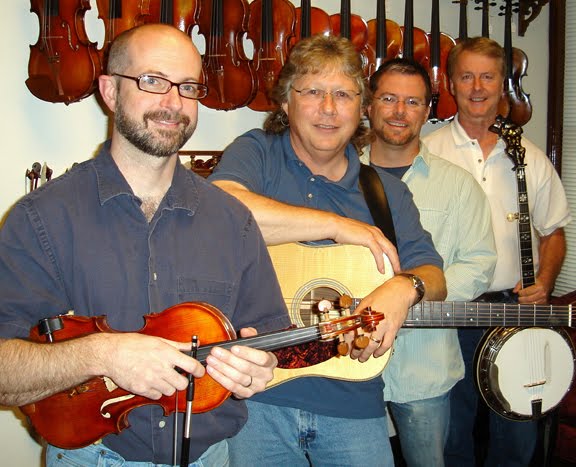
The musical traditions of mariachi and bluegrass will meet in a free one-hour concert this evening at the Great Aunt Stella Center on Elizabeth Avenue, near Central Piedmont Community College in uptown Charlotte.

I can't say I know much about bluegrass or mariachi music. But the organizers offered an interesting and educational write up about the background of both musical styles.

Here is an edited excerpt:
Back in the 1930s, two tradition-based stringband styles came of age - bluegrass in the U.S. South and mariachi in central Mexico. Today both are part of the New South musical landscape of Charlotte, NC.
The evening's bluegrass ensemble brings several of this region's top pickers together on stage for the first time. Guitarist Jack Lawrence tours internationally with flatpicking legend Doc Watson and as a soloist. Glen Alexander on fiddle captured first prize at Galax this summer, his third win at that prestigious fiddlers festival. David Grant on bass is best known his work with Charleston's Southern Flavor. Randy DeBruhl on Scruggs-style banjo won the top banjo prize at Uncle Dave Macon Days in Murfreesboro, TN.

The bluegrass music that they'll play is often thought of as "traditional," but a better description would be "tradition-based." In the late 1930s and 1940s, Southern fiddle music moved from the family farm to cities and the new medium of radio. Kentucky farm boy Bill Monroe, playing first on Charlotte's WBT then on Nashville's Grand Ole Opry, speeded up old-fashioned picking and added the punchy new sound of the five string banjo as played by North Carolina innovator Earl Scruggs. Performed by polished professionals decked out in matching outfits and cowboy hats, bluegrass swept the South and won eager listeners beyond.
Like bluegrass, mariachi has deep roots in rural stringband playing, then came to town in the 1930s. It may have been born in the state of Jalisco in central Mexico, where instrument makers developed two special variants on the Spanish guitar - the vihuela, smaller and higher-pitched, ideal for the rhythmic chording that drives mariachi, and the giant bass guitarrón, fretless with gut strings that project a solid thwump. The rhythm players supported the lead instrument, the violin. Then in 1934 a Jalisco band, Mariachi Vargas, moved to Mexico City to play for the inauguration of beloved "peoples' president" Lázaro Cárdenas. Musical director Rubín Fuentes added trumpets for punch, dressed his players in stylized charro cowboy uniforms with embroidered waist-length jackets, and forged a polished sound that took all of Mexico by storm.

Gabriel Sanchez, from the town of Toluca (between Jalisco and Mexico City) leads Mariachi Los Gavilanes ("The Sparrowhawks"). His trumpet is joined by the violin of Eifrain Martinez, Rogoberto Silva on guitarrón, and Anzelmo Alaweter and/or Alfredo Jimenez on vihuela. Each played in bands elsewhere in the U.S. - Phoenix, Chicago, Los Angeles - before getting together here in Charlotte.
The event is part of the regular monthly gathering of the Charlotte Folk Society. It's free and open to the public. It's being sponsored, in part, by a grant from the Arts & Science Council, and co-sponsored by Levine Museum of the New South and Latina 102.3 FM / Norsan Multimedia.

Parking is also free. Doors open at 7 pm and the music starts at 7:30. Questions? Visit www.folksociety.org or call 704-563-7080.

Friday, September 24, 2010

ICE won't attend Mexican consulate event.

Immigration officials have been alerted to the Mexican consulate’s visit to Concord tomorrow to help its citizens apply for passports and IDs.

Ivan Ortiz, a spokesman for U.S. Immigration and Customs Enforcement, said the agency’s Homeland Security Investigations unit and the Office of Enforcement and Removal Operations were contacted. They will not however attend.

“ICE will not have a presence at the event,” he said.

Groups that support greater immigration enforcement plan to protest the mobile consulate event at Concord High School.

Protesters contacted Concord School Board and ICE. They requested that the agency register illegal immigrants.

Officials of the Mexican consulate said no U.S. documents will be provided. They said they will be providing Mexican passports and IDs that can be used only in Mexico. They said Mexican nationals are returning home and need proper Mexican passports and IDs to get back into the country.

Mexican consulate braces for CLT protest

The Mexican Consulate expects protests Saturday when it brings its mobile offices to the Charotte area. Members of the consulate's Raleigh staff will be at Concord High School Saturday morning to help Mexican citizens living in the Carolinas apply for Mexican passports and other forms of Mexican IDs.

NCFIRE has called for its supporters to protest the event.

James Johnson, President of NCFIRE, which advocates for greater immigration enforcement, said in an email that the event is designed for one purpose only -- to "document the undocumented." He says that people in the country legally already have the necessary legal documentation to be here, including passports, green cards, and student visas.

At least one protest supporter has emailed members of the Concord School Board in protest. He also said that he has contacted U.S. Immigration and Customs Enforcement.

Officials of the Mexican consulate said no U.S. documents will be provided. They said they will be providing Mexican passports and IDs that can be used only in Mexico. They said Mexican nationals are returning home and need proper Mexican passports and IDs to get back into the country.

Friday, September 3, 2010

Latinos to pick up litter across city


Fifth annual event Saturday expected to draw 400 volunteers who will work in teams.


From the Paper:

By Franco Ordoñez
fordonez@charlotteobserver.com

Hundreds of Latinos, armed with litter sticks and garbage bags, are expected to hit the streets Saturday to help clean the city.

Some 400 volunteers are expected to take part in the fifth annual citywide cleanup organized by Jesus Ministry. It's intended to help the Charlotte community educate local Latinos on American culture - and to combat negative stereotypes.

"The Latino community is concerned about the place that we live in," said Maudia Melendez, head of Jesus Ministry. "We are part of the tapestry of the community. And we need to make sure that we've contributed - even in little ways - like keeping the streets clean."

Volunteers will be concentrating on trash and recycling, but Melendez said there is a greater message with their work.

The Latino community cares about ridding the streets of all types of garbage, whether it's litter or crime.

On Saturday, teams of volunteers will be dispatched to more than a half-dozen sections of the city, including uptown, Elizabeth Avenue, Central Avenue, and Sugar Creek Road to pick up litter and recyclables.

Jake Wilson, executive director of Keep Mecklenburg Beautiful, is helping coordinate activities and providing tools for the group.

"It's just tremendous for the Latin community to give back and take ownership of some of the (areas) that need cleaning, throughout Charlotte and the county," he said. "If we had more communities like this it'd make my job a lot easier."

Subscribe to The Charlotte Observer.


Read more: http://www.charlotteobserver.com/2010/09/03/1663882/latinos-to-pick-up-litter-across.html#ixzz0yTnTxKHV

Thursday, August 12, 2010

Man accused of raping children flagged as an illegal immigrant

In case you missed it, here is a link to my colleague's story about the Charlotte man who is accused of raping children ages 7 and 8. After receiving a tip from one of our frequent posters, Ghoul, we contacted the sheriff's department and learned that they had an immigration detainer on Ricardo Velasquez. One of our cops reporters, Cleve Wootson, took it from there.

Man accused of raping children ages 7 and 8
Suspect who's jailed in south Charlotte case has also been flagged as an illegal immigrant.

By Cleve R. Wootson Jr.
cwootson@charlotteobserver.com

A man accused of raping two children in south Charlotte Sunday night has been flagged as an illegal immigrant in Mecklenburg jail.

Ricardo Velasquez was in jail late Wednesday. He was given a $170,000 bond but was also being held by immigration authorities after sheriff's deputies identified him as an illegal immigrant under the 287(g) program.

Velasquez, 40, was charged with two counts of rape on a child under 13, two counts of taking indecent liberties with a child, and two counts of first-degree sex offense on a child. The children were ages 7 and 8, according to a police report.

Read more: http://www.charlotteobserver.com/2010/08/12/1616484/man-accused-of-raping-children.html#ixzz0wPG8CeoK

Friday, July 30, 2010

Charlotte student crosses borders for immigrants


Saul Flores, 20, is walking, hitchhiking, and photographing a 4,000 mile journey that many immigrants take to reach the United States every day.

The Harding High graduate hopes to raise awareness about immigration and money for an impoverished school in his family's hometown in Mexico. The rising N.C. State senior took a moment along his journey to talk with me about his goals.

What possessed you to do such a thing?
It is a perilous, dangerous, and sometimes mortal walk that many people, including my family, have been making for years. It is overlooked and disregarded when immigration issues are brought up in our media.

When did you start and how long will the trip take?
My trip began on May 17th, 2010, in Quito, Ecuador, and will continue through early August. I plan, and hope, to make it back into the United States by the start of the new semester at my university.

Where are you now?
I arrived in Atencingo, Mexico last night and have scheduled to stay here until Friday morning. I´m then heading to Juarez, Mexico to finish my series of photographs on the Latino cultures.

What’s your plan for today and the next few days?
Here in Atencingo, my plan is to study, evaluate,and understand the education system of Atencingo. I will be assessing the school the money raised is to benefit. At night, I will be contacting local and national newspapers, radio and television stations in Mexico and in the United States. It is a hard time for the Latino culture, it is my goal to shed light on the realities of our countries.

How far are you from your final destination?
My walk will finish in Arizona as a protest towards the new Senate Bill 1070 that will soon go into effect. I have been traveling for the past two months and anticipate reaching Arizona within the next 10 days.

How are you getting around?
Opportunity and faith have been my guide. I have crossed countries by canoe, hitched along the Pan-American Highway, and hopped behind buses to reach all of my destinations.

Where are you sleeping?
Anywhere that is dark and I can close my eyes. So far I have stayed in huts with indigenous groups, camped outside Mayan pyramids, slept on hammocks, and found floor space along the Carribean Sea. There´s nothing better than to sleep to the sounds of the ocean.

What are you eating?
Exhaustion and nerves made me loose my appetite about a month ago. But here in Atencingo, with my grandmother, I have eaten more than on my whole trip.

What’s the most surprising thing you’ve seen or heard?
Living with the KUNA, an indigenous group in Panama, has taught me to see an environmental lifestyle untouched by foreign influence or commercial products.

What’s been the biggest challenge so far?
Mental exhaustion is worse than anything, I am my biggest challenge. However, I did manage to make contact with a blue poison dart frog while crossing the Darien gap. It numbed my right leg and upper lip for a couple of days.

What's next for you?
Once arrived in the United States, I am looking for locations to display series of photographs and exhibit my journey of ¨The Walk of the Immigrants.¨ As well as sell prints to local businesses and companies. I hope to hear from local galleries in North Carolina, Arizona and in New York.

To learn more about Saul’s trip, and his photography, visit refiningthelines.com.


Thursday, July 29, 2010

Video: Where are your papers?


Local actors stage a street performance to poke fun and raise questions about Arizona’s controversial new immigration law.

If you’re walking past Trade and Tryon Streets today between noon and 1 p.m., you may be asked for your "papers" by a small group of actors. The local troupe, led by screenwriter Glenn Hutchinson, plans to use some subtle guerrilla tactics to get the lunch crowd's attention.

“We don’t want to be to confrontational,” Hutchinson said. “But hopefully that will stop someone to say what are you talking about.”

Hutchinson says the play dramatizes how Arizona’s SB 1070 could lead to racial profiling and violate the Bill of Rights. Local actors include Cecilia Becerra, Javier Gonzalez, Nuri Antomarchy, Patrick Mawn, Sarah Provencal, Cindy Kistenberg, and Holly Howell.

A federal judge took a large swipe at the law yesterday when she blocked two of the most controversial sections. U.S. District Judge Susan Bolton's injunction affects a requirement that police determine the immigration status of people they stop and think are in the country illegally. She also forbade the state from charging anyone with failure to possess immigration documents, a crime under the new law.

Hutchinson said yesterday afternoon that he was “happy to be under the stress to rewrite the play,” but added that the struggle for immigrant rights is far from over. The Arizona governor and supporters of the law expressed confidence that the law would be upheld under appeal.

An uptown rally opposing the Arizona law is still scheduled for tonight at 6:30 in Marshall Park.

Wednesday, May 26, 2010

NBC puts spotlight on immigration and Charlotte

A Charlotte immigrant's story of facing deportation after standing up to a police officer accused of sexual assault kicks off a day of immigration coverage for the news network.

NBC News, CNBC, MSNBC, and Telemundo will focus much of their news coverage today on one of the most complicated and emotional issues of the day.

Abel Moreno, 29, was fraudulently arrested in December when he says he tried to stop a Charlotte-Mecklenburg police officer from fondling his girlfriend during a bogus traffic stop.

Officer Marcus Jackson has since been fired and charged with sexually assaulting six women - including Moreno's girlfriend - while on patrol.
Moreno, who was taken to the Mecklenburg County Jail and identified as an illegal immigrant, is seeking a visa granted to crime victims and immigrants who are helping authorities in the prosecution of a criminal case.

Read more of the Observer's extensive coverage on Moreno's case here, here, here, and here.

A day after President Barack Obama issues plan to send 1,200 National Guard troops to the border, NBC launched their "A Nation Divided"
coverage with a new poll that shows white and Latino Americans divided over immigration, political parties, and how President Barack Obama is handling immigration.

Mirroring the findings of related studies, the NBC/MSNBC/Telemundo poll found 70 percent of whites favor Arizona’s controversial immigration law that requires police to question people they suspect to be in the country illegally. And 58 percent of Latinos say they strongly oppose the law.

Tune in:

The "Today" reported on immigrant families. "Nightly News" will investigate the Arizona law’s impacts and at other states considering similar measures, according to the Associated Press. "Dateline NBC" will preview their upcoming series on migrant children.

MSNBC will be following the U.S. Border Patrol as agents search for people crossing the border illegally. They will also report on immigrant neighborhoods in New York and cities that have been absorbed demographic changing numbers of immigrants. CNBC will discuss the economic impact of immigration.

Telemundo will be broadcasting some of its shows from Arizona.


Photos: Getty Images file; Davie Hinshaw/The Charlotte Observer

Friday, April 30, 2010

Charlotte activists protest Arizona law and 287(g)


Local immigration activists and supporters will march from Charlotte's Marshall Park to the Mecklenburg County jail tomorrow to protest the Mecklenburg County sheriff's 287(g) program and a new Arizona state law that criminalizes illegal immigration.

The rally will begin at 11 a.m. It's one of many such protests around the country that have stolen the spotlight from many other issues this week.

The Arizona law defines illegal immigration as trespassing and allows local law enforcement agencies to question people they suspect of being undocumented.

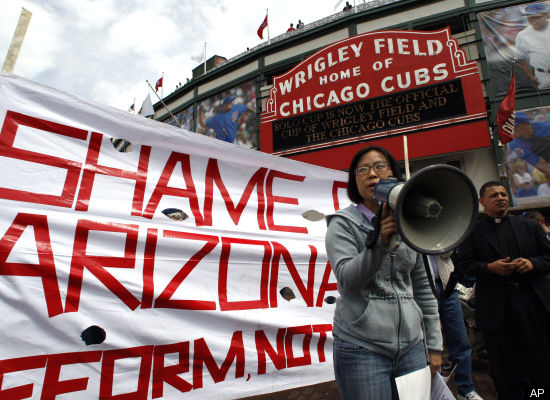
On Thursday, protesters rallied outside Wrigley Field in Chicago, where the Arizona Diamondbacks were playing the Cubs. One congressman called for Major League Baseball to pull next year's All-Star game out of Arizona.

Opponents of the law say it will encourage racial profiling, break up families, and harm communities by making illegal immigrants fearful of co-operating with police investigating crimes.

Ruben Campillo, N.C. director for Reform Immigration for America, sees the Arizona law as
an extension of 287(g), which allows local law enforcement to place arrested illegal immigrants into deportation proceedings. He said its another example of local governments overstepping their roles to confront an issue that is really the responsibility of the federal government.

Supporters of the law in Arizona say it's not about race, but rules. And that the state was essentially forced to confront the issue because of the federal government's failure to act.

A recent Rasmussen poll indicated 70 percent of likely voters in Arizona support the intent of a law authorizing police to check people they suspect of being illegal immigrants.

According to the Arizona Republic, in the past week, Arizona Gov. Jan Brewer's office said it received 5,186 calls in favor of the bill, 2,006 against.

Wednesday, March 31, 2010

The Census Boycott is on…


Some clergy call on illegal immigrants to boycott the Census. “This is a matter of moral principle,” Miguel Rivera, leader of the boycott, says.

The National Coalition Of Latino Clergy & Christian Leaders called for the boycott last year in an effort to push leaders to pass immigration reform.

Now Rivera, president of the coalition, says it's in the best interest of millions of illegal immigrants to “exercise their right to free expression maintaining themselves silent and not exposing themselves further.”

The group estimates more than 3 million illegal immigrants won’t cooperate with the Census.

The U.S. Constitution calls for a nationwide count every 10 years. The data is used to distribute some $300 billion to state and local governments and adjust congressional representation.

Census officials say its critical that every resident be counted, and that immigration status is not part of the query.

An undercount could affect millions of dollars coming to the Carolinas for roads, schools and hospitals. It could also determine whether either state gains a congressional seat.

The pastors however say political representation and federal money don't matter to illegal immigrants, who can't vote and don't get to enjoy many of the benefits of living here.

Here are excerpts from a letter Rivera sent out this morning:

"The Census boycott is on. This is a matter of moral principle and pastoral care.

Congress will not move forward with legalization, there is no moratorium on executing raids and deportations.

It is in the best interests and the welfare of millions of undocumented immigrants, to exercise their right to free expression maintaining themselves silent and not exposing themselves further…

… We recognize that the Census is important, but its own importance and accuracy, converts itself into a weapon of families destruction."

…Only a Cease and Desist on Raids and Deportations would move us to call the boycott effort to stop.

File photo: Radio host Jorge Medina asked listeners last year if they'll participate in Census. Many said they'll boycott.

Friday, March 19, 2010

Charlotte caravan heads to D.C.

They're calling for immigration reform. But can such a controversial issue pass in today's political climate?

More than 800 people from Charlotte will travel to Washington, D.C. Sunday morning to join 10s of thousands rallying for immigration reform.

A caravan of 15 buses will leave Charlotte at midnight for the rally that will take place on the National Mall.

Ruben Campillo, state director for Reform Immigration for America, said more than 3,000 people from North Carolina will be at the rally.

“The message is simple,” he said. “We want to demand that the president and congress keep their promise to pass immigration reform.”

President Barack Obama promised to push reform in his first year of office. It's now year two and advocates have grown frustrated.

Supporters say there is still time to pass an immigration bill before the November elections. But the White House says nothing can happen without strong bipartisan support.

The rally is likely to be overshadowed by the House of Representatives if they vote that day to overhaul healthcare legislation.

Latino turned out in great numbers to help elect Obama. Now some leaders are cautioning the president and congress that their continued support may depend on passing immigration reform.

"We are still interested in seeing the Democrats succeed, and see Mr. Obama succeed," Jorge-Mario Cabrera, of the Coalition for Humane Immigrant Rights of Los Angeles, told Reuters. "However, we also are telling Congress and the president that this particular promise is so essential to our community’s well-being, to our families’ well-being, to our nation’s well-being, that if it’s not kept, we will remember in the November elections."

In response, the Americans for Legal Immigration PAC, which opposes giving illegal immigrants a path to legalization, called on supporters to visit their lawmakers and “and flood DC offices with calls, e-mails, and faxes opposing Comprehensive Immigration Reform Amnesty.”

William Gheen, president of ALIPAC, cited past efforts to pass immigration reform in 2006 and 2007 failed. He said most Americans want increased enforcement against illegal immigration. "We have beaten them before and we will defeat them again," Gheen said. "We hope that more Americans fighting Washington on other issues will take notice of our past expertise in stopping out of touch lawmakers from making nation destroying mistakes."


Associated Press contributed.


Photo: Demonstrators in front of Dallas City Hall in support of fair immigration reform laws Sunday, April 9, 2006 in Dallas. (AP Photo/Fort Worth Star-Telegram,D.J. Peters)

Thursday, December 31, 2009

The "quote, unquote" immigration debate in 2009.

It's been quite a year for the immigration debate. Here are just a few quotes culled from some of the biggest stories of 2009 that we covered in This Land. Thanks for making it a successful first year for the blog.

Happy New Year!


"It’s pro-family, pro-jobs and pro-security. And the time to pass it into law is right now. " Rep. Luis Gutierrez (D -IL) introducing his 600 page bill on Dec. 15 to reform the nation's immigration laws.

"He's not the devil, but he is certainly a man who is right now not making it easy to understand why he's making the public-policy choices that he is." -- Former CNN host Lou Dobbs talking about President Obama to Fox’s Bill O’Reilly on Nov. 17 after leaving the cable news network.

“In the middle of one of the worst recessions in American history, our N.C. Community College Board decides to help illegal immigrants enroll in college when our state unemployment rate is 11 percent.” - Ron Woodard, director of NC Listen. In a Nov. 30 email regarding voters in a Civitas Institute competition selecting a bill that would allow illegal immigrants to enroll in N.C. community colleges as the year’s worst bill.

"You go to work every day and if you make a mistake, you got a colonoscopy coming from the command staff." -- Senior Cpl. Glenn White of president of the Dallas Police Association, in October after 20 Dallas police officers wrongly gave $204 traffic tickets to some drivers who didn’t speak English.

"He's out having a taco." -- ESPN announcer Bob Griese on Oct. 24 in response to a query from a fellow announcer asking where is Juan Pablo Montoya. Griese received a one-game suspension for the comment.

“It’s all politics.” - Sheriff Joe Arpaio speaking to the press on Oct. 6 after the federal government stripped his office of its authority to patrol for illegal immigrants.

"You lie!" - U.S. Rep. Joe Wilson shouted to President Obama during his address before a joint session of Congress on Sept. 9.

“I can tell you that within our organization there are real racists." Roy Beck of NumbersUSA, which advocates for greater immigration restrictions, in a July 10 meeting with advocates in favor and against immigration reform.

"There are extremes in our coalition who really are for open borders; who really are for emptying the jails. And you know we get tagged with them. They get wrapped around our neck the same way the hate crimes get wrapped around Roy’s neck." -- Douglas Rivlin formerly of the National Immigration Forum in a July 10 meeting with advocates in favor and against immigration reform.

"At the end of the day, if we're going to achieve legalization of a major share of the undocumented, we realize there will have to be some give and take over worker verification. We're not against it necessarily if all of the other pieces of immigration reform fall into place." -- Mike Garcia, president of the Service Employees International Union Local 1877 in Los Angeles.

"I was just trying to save lives. We're not asking permission from the United States to save people's lives. We never have, because we know they'd say no." -- Walt Staton, 27, a volunteer with the humanitarian group No More Deaths who was convicted of littering on federal land because he left jugs of water for illegal immigrants walking through the desert.

"It’s not an ethnic thing. If you look at how people in East Charlotte live. They eat in these restaurants. We're known for the restaurants. The community is supporting the restaurants. We’re trying to market the restaurants. So for the whole community to be labeled as not accepting of Latino people and diversity it is a slap in the face." - Ed Garber, chairman of the Eastside Political Action Committee, who says allegations are off base that the clampdown on the taco trucks operating on Central Avenue is a form of ethnic discrimination.

"The idea was great if we had the money. It was basically an add-on. But if the funding is not there, it's not there." - Sen. Larry Martin, a Pickens County Republican on a planned hotline to accept complaints about illegal immigrants not being set up in South Carolina.

We can't continue with a broken immigration system. It's not good for anybody. It's not good for American workers. It's dangerous for Mexican would- be workers who are trying to cross a dangerous border. It is putting a strain on border communities, who often times have a deal with a host of undocumented workers. And it keeps those undocumented workers in the shadows, which means they can be exploited at the same time as they're depressing U.S. wages. - President Barack Obama in a White House press conference about his first 100 days in office.

Wednesday, October 21, 2009

Charlotteans featured in 'Latino in America' series

Bill and Betty Garcia are part of CNN's two day, four-hour documentary that debuts tonight and runs through tomorrow.

‘Garcia’ now ranks among the top 10 among last names in America.

Bill, former executive director of the International House, is Puerto Rican and Betty is Dominican. They moved from their Latino neighborhoods in New York to Charlotte 15 years ago for more affordable living and escape the grind of big city life.

But now they worry they made a wrong decision. They fear by living in Charlotte their sons are not getting the same Latino experience they had growing up in New York.

The show starts at 9 p.m. Click here to see excerpts from the Garcia's interviews.

Photo: CNN

Thursday, October 15, 2009

Charlotte painter named Latino of Year


Charlotte painter Edwin Gil joins Supreme Court Justice Sonia Sotomayor and NASA Astronaut José Hernández as national Latinos of the Year.

Gil was among a list of Latino politicians, journalists, engineers, chefs, and artists honored by the Spanish language wire service EFE for their success and contributions to the Latino community this year.

Gil, one of the most well known Latino artists in Charlotte, has gained national and international notoriety for his work on a 70- by 30- foot mural aimed at uniting displaced Colombians living around the world. Using the colors of the Colombian flag, more than 8,000 Colombians have put their hand prints on the mural in a sign of unity. Gil himself is a displaced Colombian. He moved to North Carolina after he was kidnapped at gun point in Medellin, Colombia and spent the night locked in the trunk of a car. That experience changed his life, led him to leave his home country, and later become a painter. At a ceremony in Boston this summer, Colombian President Alvaro Uribe met with Gil to present him with a national award.

In August, Sotomayor became the first Latina named to the Supreme Court. Astronaut Hernández is a former migrant worker who last month returned from a two-week space mission aboard shuttle Discovery to make repairs to the International Space Station. He later took a rare public stand for a U.S. astronaut when he said the country needs to give illegal immigrants a path to legalization.

Photo: DAVID T. FOSTER III - dtfoster@charlotteobserver.com

Monday, June 8, 2009

"Anchor babies" not protected under 14th amendment, says commissioner.

A county leader says automatic citizenship issue is "ripe for litigation."

County Commissioner Bill James cited opinions among members of congress and some legal think tanks when he wrote me last week saying U.S.-born children of illegal immigrants should not be granted automatic citizenship.

He was responding to my story about U.S. Rep. Nathan Deal of Georgia and his efforts to change a federal policy that automatically grants citizenship to any baby born on U.S. soil. He and his supporters feel the current policy encourages illegal immigration and makes immigration enforcement more difficult.

James supports the effort, but questions whether the policy needs to be changed. He argues it was “never written to include everyone born in America.”

The debate is wrapped up in the 14th Amendment of the Constitution. Ratified in 1869, it was written as a result of slavery. States were saying African Americans were not citizens and therefore were not eligible for any rights. The amendment states:
“All persons born or naturalized in the United States, and subject to the jurisdiction thereof, are citizens of the United States and of the state wherein they reside."

The question at hand is whether the U.S.-born children of illegal immigrants should be considered "subject to the jurisdiction" of the U.S.

James argues they’re not.

The longstanding practice giving U.S.-born children of illegal immigrants birthright citizenship has never been directly reviewed by the Supreme Court.

James points out the children of diplomats are not subject to the jurisdiction of the U.S. Their children do not enjoy birthright citizenship. Their embassies, consulates, and residences are considered foreign soil. They can be removed at the will of the president.

But others disagree.

Miguel Manna, a former Charlotte immigration attorney who is now working in Raleigh, says illegal immigrants are subject to the jurisdiction of the U.S. Here is what he had to say:

“If an undocumented alien breaks a U.S. law or state law he/she is subject to prosecution. If an undocumented alien works in the U.S., despite not having permission to do so, they are still liable for taxes on their income. They also enjoy the benefits of our police protection, and constitutional safeguards, etc. The fact that they are in the U.S. illegally is somewhat irrelevant as most immigration violations are civil in nature.”

Manna said that when the 14th amendment was being drafted vigorous debate ensued about citizenship by birth in the U.S. Some Senators did not want the mere accident of being in the U.S. at birth to determine the great privilege. Others wanted a more expansive definition, to include diplomats and foreign dignitaries.

The reality is, Manna says, “nobody really knows what Congress intended when they added "and subject to the jurisdiction of thereof..."

Photos: Bill James, Library of Congress